


“The Wilder Shores of Marx” by Theodore Dalrymple
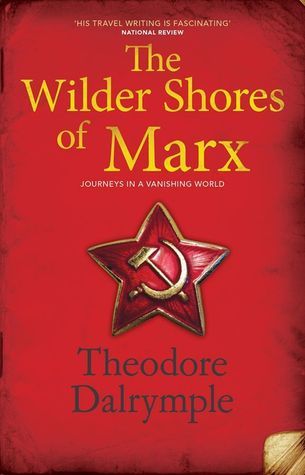 In 1988 Theodore Dalrymple visited communist Romania and these are his notes:
“When I arrived in Romania, it had been a communist state for over forty years.
Before the war, Romania was celebrated for the excellence of its cuisine.
In a tyranny such as Ceausescu’s, shortages of material goods, even necessities, were not a drawback but a great advantage for the rulers. These shortages were not accidental to the terror, but one of its most powerful instruments. Not only did shortages (which were known to be permanent, not temporary) keep people’s minds strictly on bread and sausage, and divert their energies to procuring them so that there was no time or inclination left over subversion, but they -the shortages- meant that people could be brought to inform, spy and betray each other very cheaply, for the sake of trivial material benefits that obviated the need to queue. (Let him who has not queued for hours a day cast the first stone.) And since everyone in Romania had to resort to the black market to live, everyone laid himself open to blackmail by the authorities, who could threaten him with ‘justice’ unless he co-operated.
Totalitarian regimes created a debilitating psychology of complicity. Because they owned and controlled everything, and recognised no limits to their own power, every mouthful of food, every moment of rest, every item of consumption, was enjoyed solely by their grace and favour, which could be withdrawn at a whim. Even freedom was a privilege, not a right, and a fragile one at that.
I never met a Romanian who did not passionately abhor what had been done to its country.
Romanians longed for culture, the kind of genuine culture that was not decreed by the state for the purpose of the state, but was the product of free people trying to give meaning to their lives. Rather touchingly they associated this kind of culture with western Europe, and I grew ashamed of the use (or lack of it) to which so many of our citizens put their freedom, and of their not infrequent disparagement of that freedom itself.
It seems one appreciates only what does not have.”
It was a valuable exercise to recall the interminable queues for bread and eggs, as well as the spontaneous conflicts triggered by the shortage of basic foods such as potatoes—particularly when contrasted with the present-day reality, in which foreign couriers routinely deliver food to Romanian households.
What was most unsettling was the recollection of the pervasive fear that shaped my daily existence. From a contemporary perspective, this fear could be considered severe enough to warrant its own classification within the DSM.
Reading such books is essential, as it helps ensure that the experiences endured prior to 1989 are neither forgotten nor minimized.
Publisher: Monday Books (2012)
(first published as by Anthony Daniels in 1991 by Hutchinson)

Recent Comments